How to Identify Good Installation Practices
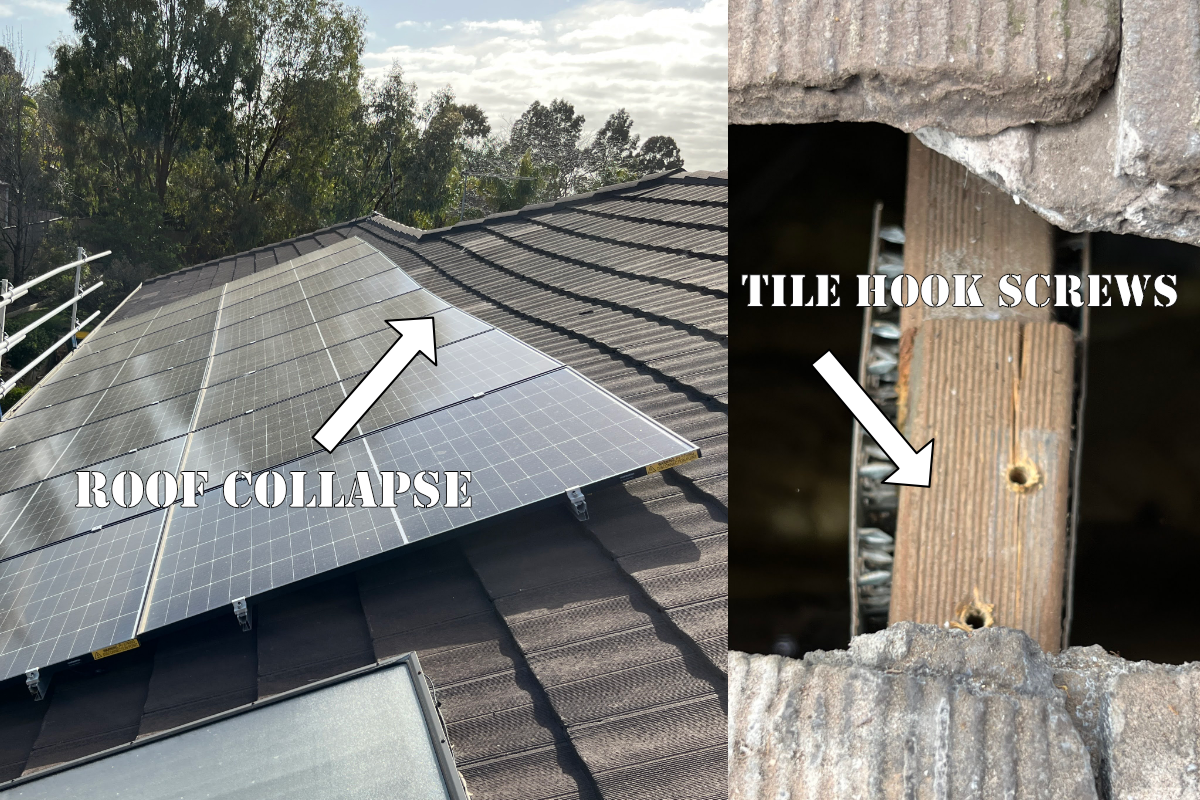
Laying solar panels on your roof is the final step of the job, but it is usually the only thing people can see. The most important part of the job lies underneath the panels, the tile hooks that connect the solar panels to the roof is one of the most fundamental parts of the installation. If done incorrectly, your roof can collapse or water can leak in through cracks left by the installation.
Working on rooftops can be a tricky job, sometimes you can't see where it is leaking because it's under the overlapping tiles. More attention to detail is needed when installing a new solar system, too many times we are called to replace a 1-6 year old solar system that should have lasted 20 years. They fell short because of the fast one-day installation practices that favour time over quality.
Common quotes from customers who suffered after the installation.
They were so good because they were finished in a day
They didn't use any of my spare roof tiles, amazing
Why are these red flags?
They were fast
If they favour making money over looking after your home, then they will be fast and the system may fail early, but the installaton company doesn't exist anymore after 3-5 years, so you are left without warranty and no way to have it fixed or repaired. Not only do you have to pay for the repairs yourself, you now need another solar company to remove and reinstall the old solar system. So stop paying 2-3 times when it should only cost once.
No spare roof tiles were used
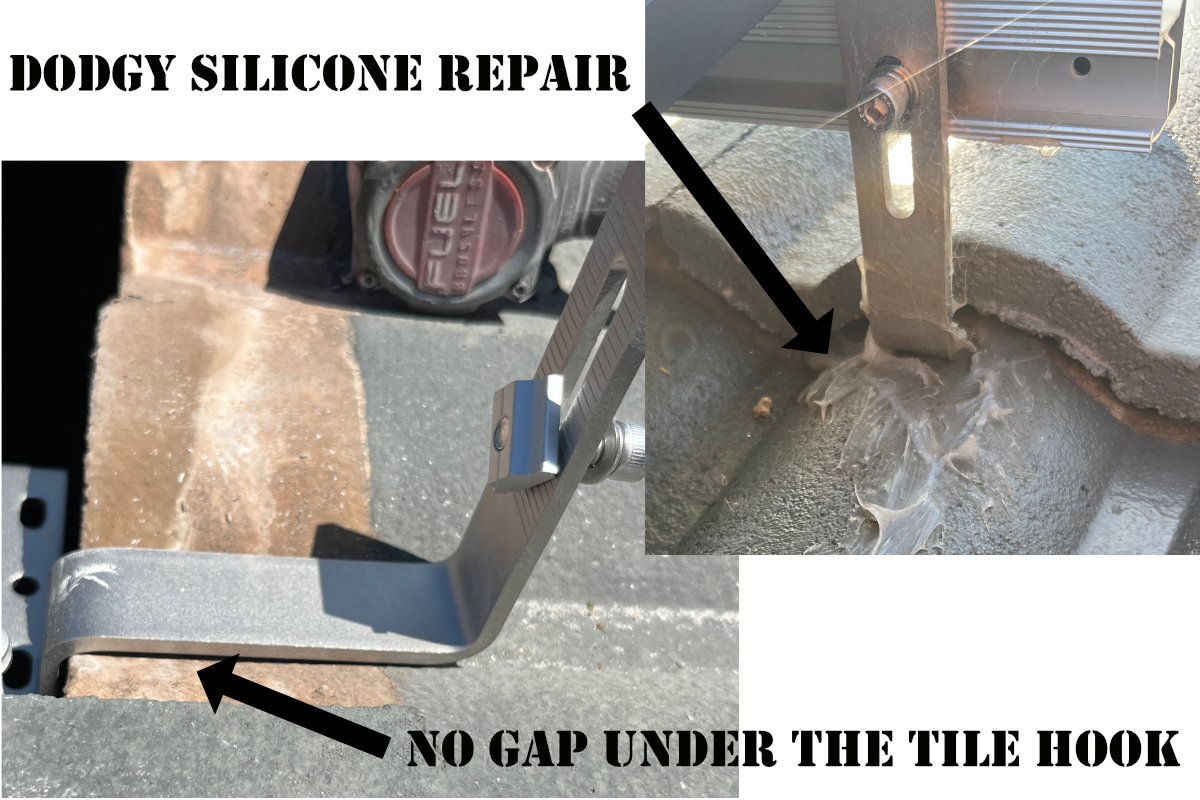
This is often the case as dodgy installers will hide the siliconed roof tiles that are broken or leaking under your solar panels out of sight.
Many customers I have met within their first years of a new solar system have had their plaster roof fall in due to roof leaks caused by siliconed roof tiles under the solar panels, we were tasked with replacing the roof tile under the panels.
We have found that after high winds and rain in Victoria, Australia, many solar systems can leak as solar installers haven't placed the tile hooks (holding solar panels) close enough together and there is no gap under the tile hook itself. Then the tile hook vibrates on the tile below as the wind vibrates the end solar panels, causing the tile hook to jackhammer through the tile below; this crack in the tile widens over time, then starts to leak water into the roof.
This is why at Pro Tradie we learn from others' mistakes and engineer solutions to do our very best to correct and protect people's properties from unnecessary damage.